

The 2026 Technician’s Guide to Connector Surgery
Professional Electrical Plug Replacement From Tesla to Toyota
In the modern service bay, electrical repair is no longer trial-and-error. In 2026, technicians are expected to diagnose, isolate, and restore circuits with precision. Whether you’re facing a melted headlamp connector on a Ford F-150, a high-speed sensor circuit on a Tesla Model 3, or an aging oxygen sensor connector on a Honda Civic, your ability to properly service connectors directly impacts cycle time, reliability, and customer trust.
This is connector surgery, and done right, it keeps vehicles on the road and comes back out of your bay.
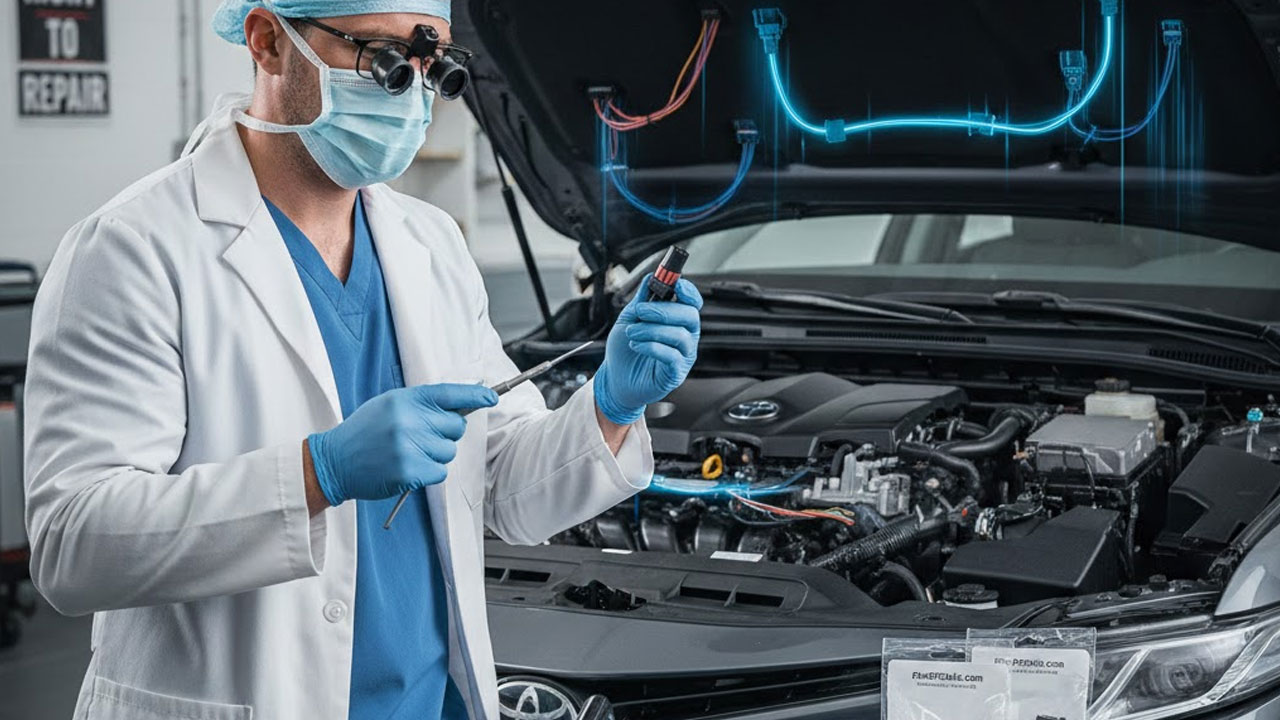
1. The Anatomy of Modern Automotive Connectors
Today’s vehicles rely on dense electrical networks where even minor resistance can cause major faults. Common connector types you’ll encounter include:
- 2-Pin Connectors
Widely used for basic sensors and actuators, such as horn circuits and temperature sensors on Toyota Camry platforms. - 4-Pin Connectors
Found in higher-load or signal-plus-power applications like fuel pumps and throttle components on Chevrolet Silverado trucks. - High-Density Multi-Pin Connectors
Used in ADAS, infotainment, and powertrain control modules on vehicles like the Honda Accord and Tesla platforms.
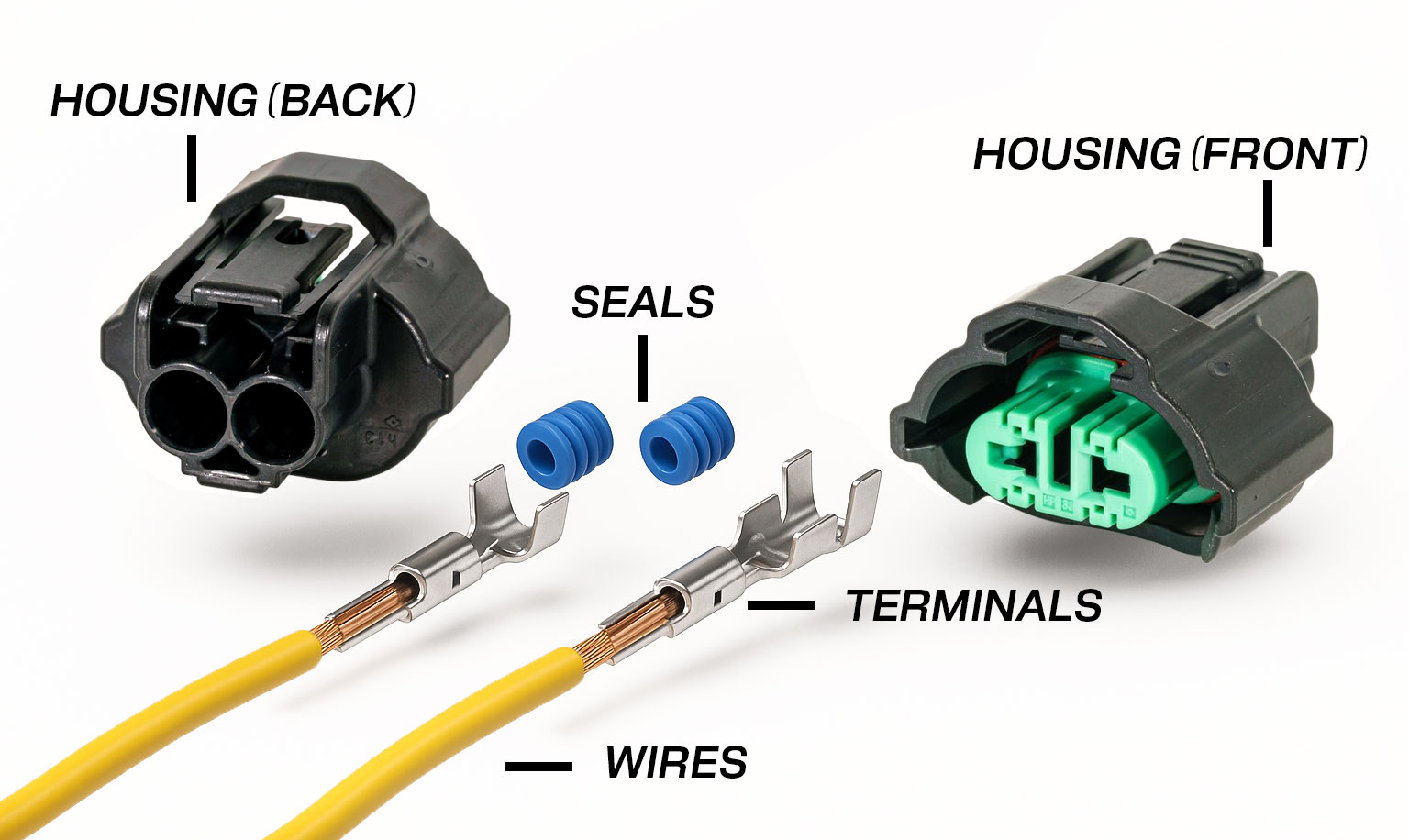
Understanding connector design and terminal retention is the foundation of any professional electrical plug replacement.
2. The No-Damage Method for Push-In Connector Release
One of the most common technician questions we hear is how to remove wires from push-in connectors without breaking the housing.
If you’ve ever cracked a brittle connector shell during a repair, you already know why technique matters.
The Professional De-Pinning Process
- Clear the Area
Use compressed air to remove dirt and corrosion before attempting release. Debris can lock terminals in place. - Relieve Terminal Tension
Push the wire slightly into the connector housing. This disengages the locking tang from the terminal window. - Engage the Retainer
Use the correct de-pinning tool to lift the plastic catch or depress the metal tang. Precision matters here. - Extract Smoothly
While holding the retainer open, pull the wire straight back. No twisting, no force.
This process protects the connector housing and preserves proper pin tension when repair is allowed.
Featured Video: Auto Connectors: Depin and Repin a 2-terminal connector, L64A2

3. Brand-Specific Electrical Pain Points
Every manufacturer has its own connector challenges. Knowing them saves time.
- Tesla
Ultra-thin data wires and sensitive signal circuits demand clean, OEM-grade connections. Improvised repairs risk communication faults. - Toyota & Honda
Excellent connector quality overall, but repeated heat cycles can make older 2-pin and 4-pin housings brittle. - Ford & Chevrolet
Truck platforms commonly experience fretting corrosion and heat damage in high-load connectors, often requiring full pigtail replacement.

4. Repair vs Replace: A Technician’s Decision Guide
Use this quick checklist to determine whether a connector should be serviced or replaced.
| Localized wire break near terminal | Flex fatigue | De-pin and re-terminate if housing is intact |
| Melted or deformed connector | Excessive heat or resistance | Replace with a new pigtail |
| Green corrosion at terminal | Moisture intrusion | Replace and cut back to clean copper |
| Intermittent signal faults | Loss of pin tension | Replace connector to restore contact force |
| OEM harness backordered | Extended downtime risk | Use a quality pigtail solution |
When in doubt, replacement is often the safer, faster option.
5. The FindPigtails.com Standard
A proper electrical repair restores the circuit to factory performance, not “good enough.” In today’s vehicles, that means clean connections, correct terminal retention, and minimal resistance across the circuit.
- High-quality pigtails allow technicians to:
- Avoid extended OEM harness backorders
- Maintain proper connector geometry and pin tension
- Reduce comebacks caused by heat or corrosion
- Keep vehicles moving without compromising repair quality
When repair isn’t the right call, FindPigtails.com helps technicians replace connectors the right way. Instead of waiting weeks on a backordered OEM harness or risking a temporary fix, our OE-style pigtails are designed to restore proper pin tension, fit, and electrical integrity. If you’re unsure whether a connector should be repaired or replaced, our team can help you identify the correct solution fast. Contact us to get the vehicle back on the road without compromising the repair.
